Tesla’s Self-Driving Promise Shrinks to a Few City Blocks
Owners will not get a car that drives anywhere, but a vehicle that joins a managed robotaxi network in limited areas.
By Camila Rodriguez ·
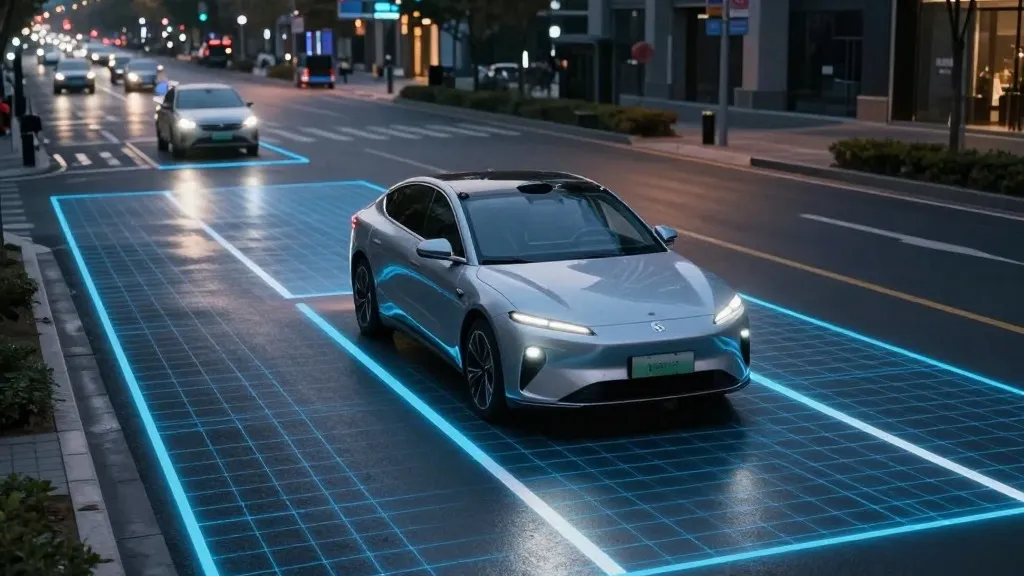
For Tesla owners who paid for Full Self-Driving, the definition of the product has just changed. The company no longer promises a car that will drive you anywhere you want to go. Instead, the new plan involves adding your private vehicle to Tesla’s managed robotaxi fleet. This means your car will only drive itself unsupervised in specific zones where Tesla already operates its taxi service.
The update was announced during Tesla’s Q3 2026 earnings call today. AI chief Ashok Elluswamy stated that unsupervised FSD for customer-owned cars is targeted for the second quarter of 2027. He clarified that this is not a software update that allows owners to sleep in the back of their Model Y on any road. It is a system that lets owners integrate their vehicles into Tesla’s existing robotaxi network.
This answer addressed a top question from retail shareholders, which was backed by approximately 1.1 million shares. The question asked when unsupervised FSD would arrive in customer cars. Elluswamy’s response shifted the focus from a universal software feature to a managed service. The car operates under Tesla’s control, not the owner’s, and only within established boundaries.
Those boundaries are currently small. Tesla’s robotaxi service operates in six U.S. metropolitan areas, but the service areas cover only small slices of those cities. In Miami, the zone includes mostly West Miami and a strip toward Doral and Sweetwater. Orlando and Tampa launched in July with similarly limited geofences. Inside these zones, the service avoids highways and harder driving conditions, sticking to low-speed routes.
The current fleet and mileage data highlight the gap between the promise and the present. Tesla reported nearly 2 million cumulative unsupervised miles by the end of Q3 2026. Third-party tracking this spring showed only dozens of fully driverless Teslas on the road, far fewer than the hundreds of thousands Elon Musk had previously discussed. Competitor Waymo has already accumulated over 3 million miles and was present in Orlando and Tampa before Tesla.
The new timeline is the latest in a series of shifting dates. In July 2025, Musk told investors that unsupervised FSD would be available for personal use by the end of that year in certain geographies. A year prior, he suggested it would happen the following year. Owners of hardware version 3 (HW3) have already been told their computers cannot run unsupervised FSD, with no clear upgrade plan provided.
Elluswamy identified safety as the main bottleneck preventing wider adoption. He stated that Tesla limits its operations to low-speed roads and avoids complex environments because of safety concerns. He guessed that these issues would be resolved by next year, but acknowledged that the timeline is uncertain. The company is essentially operating on a best-guess basis regarding when the technology will be ready for broader unsupervised use.
What happens next depends on Tesla’s ability to expand its robotaxi zones and improve safety metrics. For now, the product remains narrow. Your car joins Tesla’s fleet, operates in Tesla’s zones, and follows Tesla’s terms. There are no highway road trips or cross-town airport runs. The unsupervised commute is only possible if you live and work inside one of the limited service areas. The goalpost has moved from a car that drives you anywhere to a car that works as a robotaxi inside a small geofence.
The announcement reinforces a pattern of moving timelines. Each new date replaces the last, often with a narrower scope of functionality. For ordinary buyers, this means the car they purchased for a specific capability is now functioning differently than advertised. The technology is real, but its application is constrained to a small fraction of the driving experience most people expect.
Source: Electrek