Tesla Resets Optimus Timeline to Late 2027 Amid Hardware Hurdles
The automaker admits that robot hands and AI reliability remain unsolved, pushing external deliveries back while competitors like XPeng and Boston Dynamics accelerate their own programs.
By Christopher Reed ·
The race to deploy general-purpose humanoid robots has entered a new phase of realistic recalibration. Tesla has officially pushed the timeline for delivering its Optimus robots to outside customers to the end of 2027, a delay attributed to persistent challenges with the machine’s hands, durability, and artificial intelligence capabilities.
During the Q3 2026 earnings call, CEO Elon Musk outlined the current status of the project, noting that early production has begun on the high-volume line in Fremont, California. This facility, previously used for Model S and Model X production, now houses the majority of the equipment needed for a theoretical annual output of one million units. However, Musk clarified that reaching a weekly production rate of 20,000 units will take at least another year, possibly longer, due to ongoing design changes in critical components.
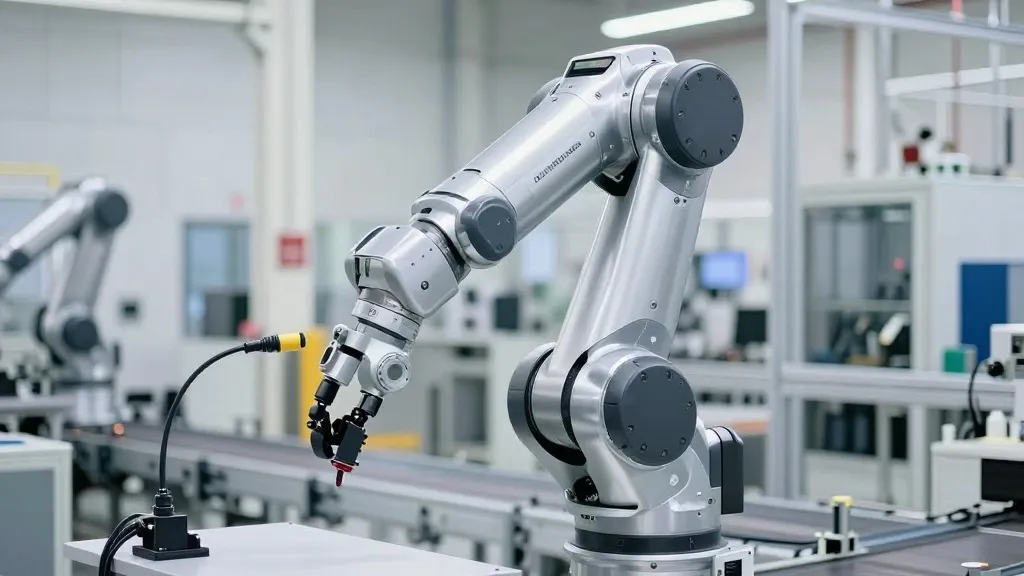
The primary obstacle identified is the robot’s hand. A Tesla Optimus engineer described the hand as one of the most difficult hardware areas to perfect, alongside custom gears that still face reliability concerns. Musk agreed, explaining that the fingers must be soft enough to handle delicate objects yet durable enough to withstand constant wear, a challenge exacerbated by the fact that robots cannot heal their own skin like humans do. These mechanical issues are compounded by AI architecture problems that Tesla is still working to resolve.
To address the lack of a large robot fleet for data collection, Tesla plans to build between 10,000 and 20,000 units to practice tasks in an internal program called the Optimus Academy. The company also intends to integrate its AI5 chip into the robots around April 2027. Musk promised a video within the next one to two months demonstrating the robot performing unscripted tasks, arguing that many current industry demos rely on pre-programmed routines that would fail in real-world conditions.
This setback follows a period of shifting expectations. In 2024, Musk suggested internal use in 2025 and high-volume external sales in 2026. By January 2025, he projected building 10,000 robots that year, though he later admitted none were doing useful work. The Q3 shareholder letter now describes the current output as the first “production-quality” bots, implying that earlier units did not meet this standard. Reports from last month indicated that while production had ramped to hundreds of units per week, the robots struggled to generalize to new tasks, with hands containing over 100 hand-assembled parts and AI systems taking days to learn basic movements.
Competitors are not standing still. XPeng activated an automated IRON production line in Guangzhou in September, with over 80% of core processes automated. The IRON robot features 21 degrees of freedom in each hand and runs on three in-house Turing chips. XPeng targets mass production by late 2026 and deliveries starting in the first half of 2027, beginning with retail environments. Similarly, Boston Dynamics began producing its electric Atlas in January and has committed all its 2026 deployments, including a partnership with Google DeepMind. In September, Boston Dynamics opened a training center in Georgia where Atlas is learning to sequence car parts for Hyundai’s assembly line.
Musk stated on the earnings call that, to his knowledge, no other company is close to Tesla in developing a general-purpose humanoid. However, Boston Dynamics has taken a pragmatic approach by prioritizing sturdy grippers for industrial parts over human-like dexterity, effectively sidestepping the specific hand issue Tesla cites as its main hurdle. The company also hired Milan Kovac, Tesla’s former head of Optimus, in January, signaling a continued talent war in the sector.
The next few months will be critical for Tesla’s credibility. If the promised video shows genuine, unscripted work, it may validate the late-2027 delivery target. Until then, the industry remains in a race where building robots is less difficult than making them useful, with Tesla, XPeng, and Boston Dynamics all grappling with the same fundamental engineering barriers.
Investors and industry watchers will likely look for concrete proof of progress in the coming quarter. The shift from prototype to production quality is a significant milestone, but the path to widespread commercial adoption remains fraught with mechanical and software challenges that have yet to be fully solved by any major player.
Source: Electrek