Amazon Abandons Loudoun Data Center Plans for Homes and Parks
The tech giant is swapping four AI-focused facilities for mixed-use development and a community arts center after residents pushed back on noise and power demands.
By Luis Fernandez ·
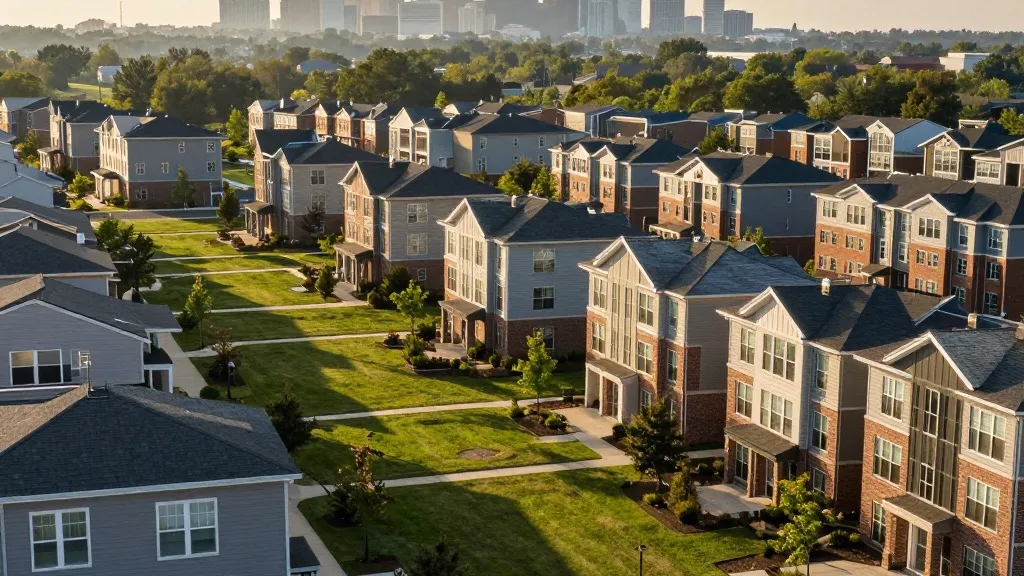
Amazon has officially dropped its plans to construct four new data centers on a 122-acre site in Loudoun County, Virginia, opting instead to build homes and community spaces. The company will repurpose the majority of the land, which was formerly a George Washington University campus, for mixed-use and residential development. This decision marks a significant reversal for the tech giant, which had submitted its original proposal to build the facilities just last July. Instead of servers and cooling systems, the area will now host living spaces for local families.
The financial and physical details of the new arrangement are substantial. Amazon is donating 25 acres of the property to Loudoun County, with the specific intent that the land be used for a community arts center and a new recreational facility. In addition to the land transfer, the company is contributing $5 million to the county’s housing fund. This fund is designed to help make homes more attainable for working families in the region. The remaining acreage will be developed for general residential and mixed-use purposes, creating a neighborhood rather than an industrial park.
Key figures on both sides have framed the outcome as a collaborative effort. Josh Weissman, Amazon’s vice president for data center development, noted that the company had initially been eager to purchase the former university campus. However, he acknowledged that the company took the county’s “pointed concerns about data center development at this particular site” into serious consideration. Weissman stated that while Amazon viewed the legal development potential of the property differently than the county did, they concluded that a shared vision was better than “costly litigation.”
The shift in strategy follows a period of intense negotiation and community pressure. In September, Phyllis J. Randall, the chair of the Loudoun County Board of Supervisors, met with Amazon representatives. During these discussions, it was suggested to the company that finding an alternative use for the land might be the most beneficial path forward. The local community had raised valid concerns regarding the noise generated by data centers and the immense amount of electricity required to keep them running. These issues have made residents in the area, often dubbed “Data Center Alley,” increasingly wary of further industrial expansion.
Loudoun County already holds the distinction of having the largest concentration of data centers on the planet. The recent boom in artificial intelligence has intensified demand for larger and more powerful facilities, but it has also heightened local opposition. Communities are increasingly worried about the impact of these mammoth facilities, including potential spikes in local electricity prices. The situation reflects a broader trend where local officials and residents are pushing back against the rapid growth of infrastructure needed to support cloud services and AI applications.
The decision comes as national leaders also begin to address the energy costs associated with data centers. Just days before this announcement, President Donald Trump called for data center builders and AI hyperscalers to provide a dividend to local communities amid rising energy prices. He further stated that data centers should be required to generate their own electricity and sell any excess power back to the local grid. This national conversation aligns with local sentiments in Northern Virginia, where the strain on the power grid is a frequent topic of discussion.
County officials are celebrating the outcome as a success of diplomacy over conflict. In a statement, Randall emphasized that by choosing “dialogue over reflexive disagreement,” the county and Amazon created a unique opportunity. She highlighted that the agreement provides new spaces for residents to gather, create, and play. For Randall, the most important aspect of the deal is the provision of more attainable housing for working families, a critical need in the current real estate market.
For readers in the Mid-Atlantic, this development signals a potential change in how major tech companies approach real estate in the region. The shift from industrial to residential use in such a high-demand area could have ripple effects on local housing availability and community infrastructure. While the data centers are gone, the land is not empty; it is being transformed into a hub for daily life, reflecting a growing preference for livable spaces over purely technological infrastructure in Northern Virginia.
The resolution of the Loudoun County dispute offers a case study in balancing technological growth with community needs. As the demand for AI processing power continues to rise, the tension between tech giants and local residents is likely to persist. However, this specific instance shows that through negotiation and financial incentives, it is possible to find a middle ground that benefits both the company’s long-term interests and the immediate quality of life for local residents.
Source: Tom's Hardware