Google's AI Chips Run Inside Meta's Data Centers
Software updates allow Meta to use Google's custom processors for AI tasks without major code changes, a move that could loosen Nvidia's grip on the market.
By Fatima Zayed ·
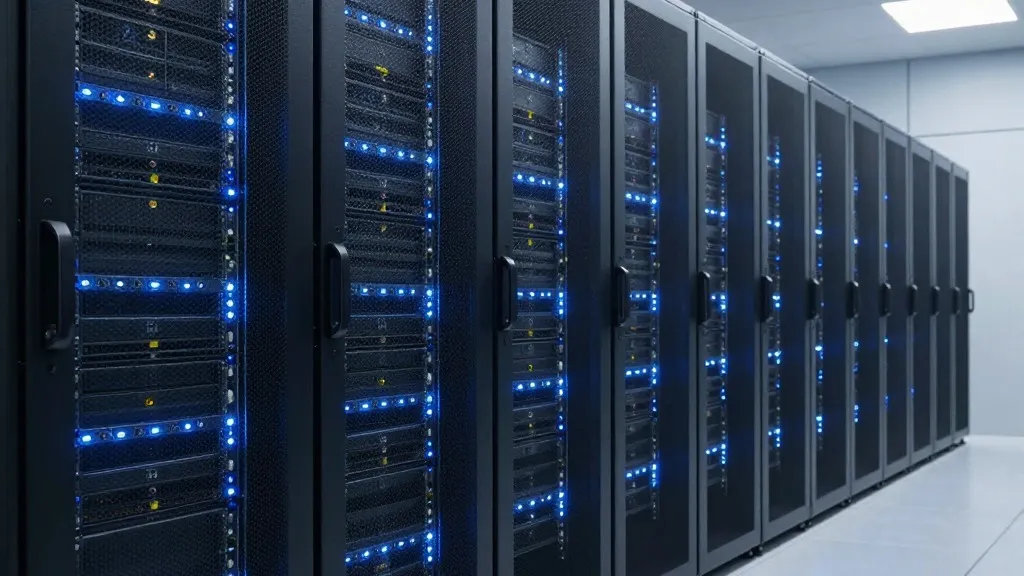
Google's custom artificial intelligence chips are now running production workloads at Meta, a significant step that could reduce reliance on Nvidia's processors for large-scale AI tasks. The development means Meta can deploy its PyTorch-based AI models directly onto Google's Tensor Processing Units (TPUs), a shift made possible by new software tools that bridge the two systems. This integration could alter the competitive dynamics in the AI hardware market, where Nvidia has long held a dominant position. For developers and researchers, this provides a clear alternative for running complex AI computations.
The change is driven by new, open-source versions of popular AI inference engines, SGLang and vLLM, which have been updated to be 'PyTorch-native' on TPUs. Previously, these tools required conversion to Google's JAX framework to function on the hardware. The new software, developed through a collaboration between Google, Meta, and the SGLang team, eliminates the need for significant code rewriting. Meta's PyTorch-TPU lead, Zongwei Zhou, stated that the engine provides Meta with 'a remarkably mature, PyTorch-native serving stack.'
This move aligns with Meta's strategy to maintain flexibility in its technology stack. Jana van Greunen, director of PyTorch engineering at Meta, noted that the company 'cannot be constrained by a single hardware architecture' and that the new tool 'enables us to deploy our PyTorch workloads to Google TPUs.' The release of this software is part of a broader trend, as it follows Amazon's announcement of its own native PyTorch backend for its chips. Both initiatives aim to provide viable alternatives to Nvidia's software ecosystem, which has created a strong lock-in for its hardware.
Performance data suggests these alternative chips are highly competitive. A test conducted by Inferact, a startup founded by the creators of vLLM, showed that a single user could receive over 700 tokens per second using Google's seventh-generation Ironwood TPU. This setup, which ran on 16 Ironwood chips, was compared against a similar configuration using 16 Nvidia GB200 chips, which reached 452 tokens per second. The test involved serving Moonshot AI's Kimi K3 model and utilized a technique called speculative decoding to accelerate the process.
While the specific location of Meta's TPU deployment is not yet public, reports from last year indicated that discussions were underway regarding renting Google Cloud TPUs in 2026, with a potential purchase in 2027. It was later reported that Meta had signed a multi-year rental agreement for the chips. The software will continue to be updated, with plans to add support for new open models, including DeepSeek V4.1 Flash and Reflection Beam.
The collaboration between Google, Meta, and RadixArk aims to provide support for new open models on their release day by the first quarter of 2027. Further details on this partnership are expected to be shared at the SGLang Summit 2026, scheduled for November 12–13 in San Francisco.
Source: Tom's Hardware